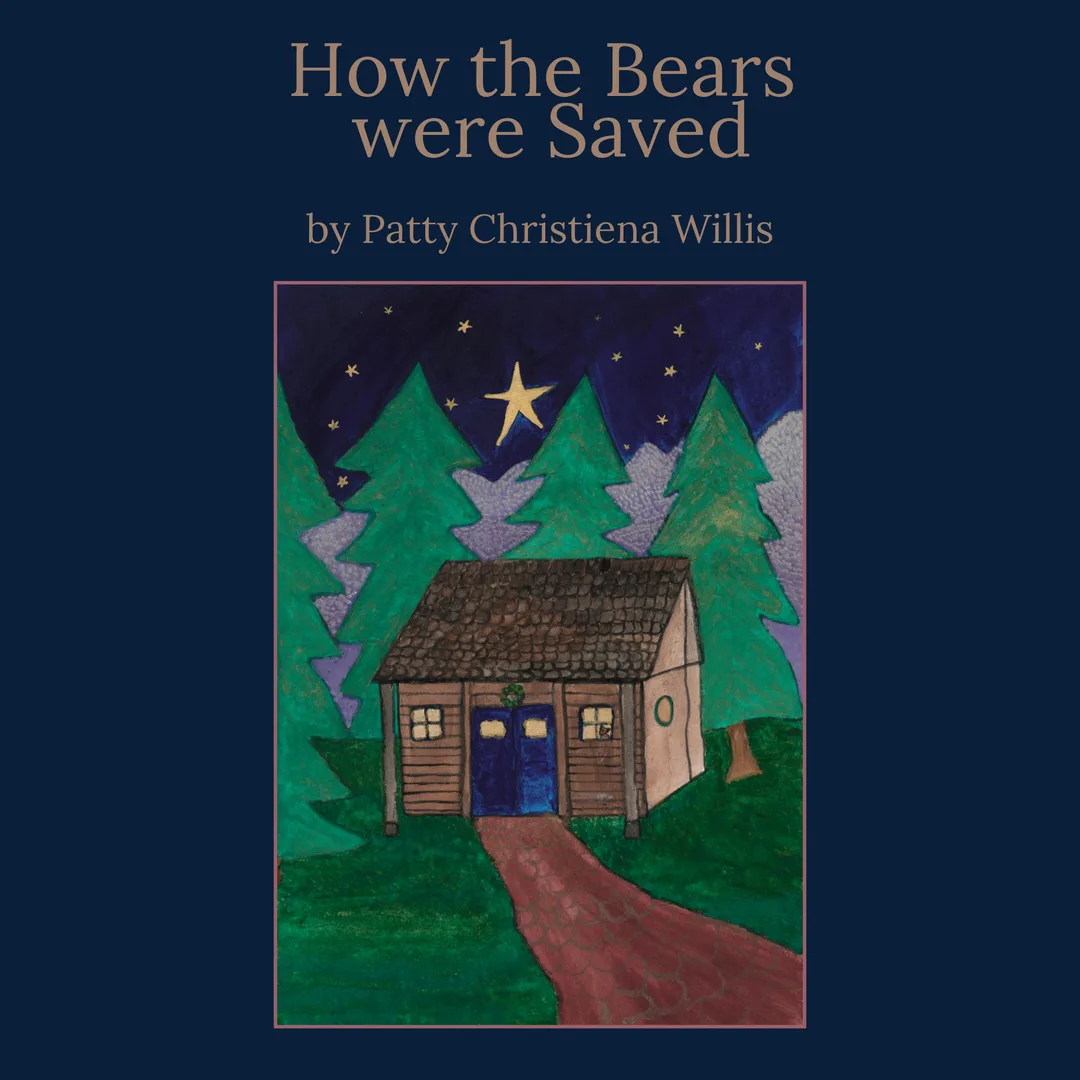
The LA Times wrote that Patty Christiena Willis’s work “shows the power
of the folktale to create wonder.” “How the Bears were Saved,” imagined
out of events that happened in a small village in rural Japan, is full of that
wonder. After a summer with rain that destroyed the food sources of the
bears in the mountains, the bears gather to consider what to do. An old
remembered story sends them on a journey. Will they find what they
need? This story was first published in Japanese as a chapter in Patty’s
larger work, “Village Above the Stars.” The Japanese Press compared the
work to Miyazawa Kenji and Antoine de Saint Exupery and the book was
placed on the recommended reading list for the Japanese National Library
Association. An exhibition of the illustrations celebrates its debut in
English.
This book marks the beginning of Rhino River Press.
A Book is Born!
Featured in the Children's Book Review:
In this beautiful folktale, readers will learn messages about resilience, reciprocity,and the long-reaching consequences that kindness to others can have. One winter, heavy rains washed away the food the bears depended on to prepare for their winter hibernation. They knew they had just one hope: stories passed down through generations of bears told that if they went down the mountain, the foxes would help them—so down the mountain they went. But when the humans in the village saw the bears, they became frightened, imagining the bears to be dangerous monsters. They decided to hunt the bears. Just in time, the foxes got the bears fed, tucked in to bed, and hidden for the winter—but will the canny humans spot the bears in their hiding place? Perhaps … but perhaps the hunters are having too much fun searching for the bears to try very hard. And, to the foxes' surprise, help comes from an unexpected quarter too—one kind human who decided to let sleeping bears lie.
The foxes who tell the story are wise and kind, and the bears they rescue are majestic. Although they are technically the villains of the story, the humans are portrayed with empathy and humor, almost childlike in their quickness to fear, their impetuous actions, and their easy distraction by the fun of going on a bear hunt. The text is lyrical and flowing, with a rhythm that lends itself well to reading aloud.
Hand-drawn artwork depicts humanized foxes and bears against a dark blue background deeply evocative of the winter night, while pattern is used to add texture to both the natural environment and the colorful clothes that the people and animals wear. Simple in its messaging and uplifting in its ending, "How the Bears Were Saved" is sure to be enjoyed by any reader who loves stories about the secret lives of animals.
Buy the book from IngramSpark here!